Soundmap - Find Your Songs
- 4.5
- Rating
- 500.00K
- Installs
- Free
- Price

 Analysis by App-foxy
I approached Soundmap - Find Your Songs as a music discovery app with a social collecting layer rather than as another streaming player. Its central idea is simple: music fans explore, collect, and trade songs with other people. That makes it feel closer to a digital record hunt than to a conventional audio library. I found the concept immediately appealing because it gives listening a sense of purpose, but it also means the app asks for more attention than a service designed only to play a playlist.
Developed by SuperStar Labs, this free Music & Audio app is aimed at Teen users and runs on Android 8.0 or later. It has reached over 500 thousand installs and holds a 4.5 average from around 102 thousand ratings, which suggests that the collecting idea has found a sizeable audience. The current version is 2.18.1. I would describe it as a companion for people who enjoy discovering artists, comparing tastes, and turning music knowledge into a social activity, not as a replacement for a full streaming subscription.
How Soundmap feels to use in everyday situations
I find Soundmap most useful when I treat it as a small, deliberate music break rather than something to check constantly. A practical habit is to decide what I’m looking for before opening it—perhaps an artist to explore or a collection gap to review—so browsing stays enjoyable instead of becoming another endless scroll. That routine also makes it easier to judge whether its appeal continues beyond the first burst of novelty.
You May Also Like

 Blood Strike: 2.5 Anniversary
Blood Strike’s Loadouts Turn Every Drop Into a Tactical Gamble
A close look at Blood Strike’s custom loadouts: how fast access to signature weapons reshapes its battle royale rhythm, rewards preparation, and narrows the gap between fights.

 Pandora - Music & Podcasts
Pandora’s Music Is Easy to Start, but Harder to Recover
Pandora’s strength is its low-effort path from a seed to a station. Its weak spot is how much confidence it asks you to place in connection, setup, and quiet recovery.

 8 Ball Pool
 Is Built on Rivalries, Rematches, and Routine
A close look at the rivalries, rematches, shared routines, and unanswered safety questions that turn a quick pool match into a persistent mobile community.

 Samsung Music
’s Quiet Strength Is Playing What You Already Own
Its reach comes less from spectacle than from dependable access to a personal library. That simplicity is both the app’s strongest retention engine and its ceiling.

 AccuWeather: Weather Radar
AccuWeather Review: A Quick, Clear Forecast for Everyday Decisions
For everyday plans, the best forecast is the one you can understand quickly. AccuWeather makes rain timing, radar, and local conditions easy to act on, with a few trade-offs.

 Hill Climb Racing
Why Hill Climb Racing Still Turns Crashes Into One More Run
A tiny car, a bumpy hill and one more upgrade: Hill Climb Racing keeps resurfacing because its simple chaos makes every near-miss feel personal.
More From Our News Desk
View All News


Readability and navigation during a first session
The strongest part of the experience is the clear separation between finding music, managing what you have, and interacting with other fans. I never felt that the app was trying to be a traditional player with a collecting feature hidden somewhere in a menu. Its identity is built around music items and the decisions connected to them: whether to keep something, look for a better trade, or continue exploring.
That structure is easy to understand once the collecting loop clicks. A new user can begin by browsing, notice an appealing song or artist, and then work out how it fits into a personal collection. The social purpose also becomes apparent quickly. You are not simply saving tracks for private playback; you are building something that can be compared and exchanged. For me, that made the first session more engaging than opening an ordinary music app and passively scrolling through recommendations.
There is a difference between readable navigation and effortless navigation, though. Soundmap presents several kinds of information at once: the music itself, collection status, possible exchanges, and social context. Someone who prefers a quiet, linear interface may need a little time to understand what deserves attention first. I recommend spending the opening session learning the meaning of each collection and trading action instead of trying to optimize immediately. That small pause prevents the app from feeling busier than it really is.
The app’s name and purpose are also easy to remember, which matters for casual users. I could explain it to a friend in one sentence: it is a place to collect and trade songs with music fans. That clarity does not remove every learning step, but it gives the learning a useful direction. You are not memorizing an abstract points system; you are trying to build a music collection and connect it with other people’s tastes.
Why the collection view changes the way I discover music
In a normal streaming service, I usually judge a recommendation by whether I want to hear it immediately. Here, I also consider whether it completes a musical interest, creates a worthwhile trade, or introduces an artist I would otherwise overlook. That second layer is one of the app’s most distinctive strengths. It encourages curiosity even when I am not searching for a particular album or playlist.
A useful personal workflow is to treat the collection as a map of your taste rather than a trophy cabinet. I would first gather artists I genuinely enjoy, then use trades to explore nearby styles. This keeps the experience from becoming a frantic hunt for anything new. It also makes social exchanges more meaningful because you have a clearer idea of what you are willing to give away and what you actually want to find.
Another practical tip is to avoid making every decision while distracted. When I am walking or rushing between tasks, I am more likely to accept or reject a trade without thinking about whether it improves the collection. I get more value from reviewing exchanges when I can look at the artist and song information calmly. The app is casual in tone, but its collecting decisions can become surprisingly personal.
Motor and sensory considerations
Soundmap can work well for users who are comfortable with short browsing sessions, tapping through music-related cards, and making repeated selection decisions. The basic actions are familiar enough that I did not need technical knowledge. A person who enjoys visual organization and quick comparisons may find the collection format satisfying, especially when the goal is to complete a theme or discover a new artist through another user.
At the same time, the experience is not equally comfortable in every physical context. Trading and collection management demand accurate taps and sustained visual attention. On a crowded bus, while carrying shopping, or when using the app one-handed, it is easier to select the wrong item or overlook a detail. I would save more deliberate collection work for a stable setting and use short travel sessions mainly for browsing.
The sensory side deserves similar care. Music-related screens can be stimulating because they combine artwork, labels, collection information, and social choices. Users who are sensitive to visual density may prefer to focus on one task at a time rather than move repeatedly between discovery and trading. I found that limiting my goal for a session—such as looking for one artist or checking a few possible exchanges—made the app feel calmer and easier to process.
The Teen content rating is worth taking seriously for families. It signals that this is not an app I would hand to a young child without first checking how its social and music-focused environment fits the child. For teenagers and adults, the rating is a reminder to use sensible judgment when interacting with other fans. The social element is part of the appeal, but it also means the app is more open-ended than a private music player.
Situational access: where the app fits and where it does not
I see the app working best during low-pressure moments: sitting at home with a few minutes to spare, taking a break from work, or chatting with a friend about favorite artists. It creates an easy conversation starter because a collection reflects personal taste. A friend can ask why you kept a particular song, what you are searching for, or whether you would trade something they want. That is more engaging than simply sharing a playlist link and moving on.
A realistic everyday scenario would be a commuter using Soundmap after arriving at a café. Instead of trying to manage trades while walking, they can settle down, review their collection, and decide which songs are genuinely expendable. They might then use the next short break to browse for a missing artist or respond to a promising exchange. This rhythm suits the app better than constant checking. The goal is not to turn every spare second into a collection task; it is to make occasional music discovery feel rewarding.
The app is less suitable for situations where uninterrupted audio is the only priority. If I want a carefully controlled listening session, a dedicated streaming service remains the better tool because its purpose is playback, playlists, and queue management. Soundmap adds discovery and social collecting, but those features can pull my attention away from simply listening. I would use both types of app for different reasons rather than expect one to replace the other.
It also may not suit someone who dislikes exchanging digital items or comparing collections. The social layer is not an optional decoration in my experience; it shapes the reason to return. A solitary listener who wants private organization, offline access, or a straightforward library may feel that Soundmap adds unnecessary decisions. In that case, a conventional music library or streaming app would be a more comfortable choice.
Trading requires patience and a clear personal strategy
The trade system is where the app becomes more than a discovery feed, but it is also where friction can appear. A trade is not automatically valuable just because it contains a song you recognize. I found it helpful to ask three questions before accepting: do I like the artist, does this fit the direction of my collection, and would I regret losing what I am offering? That simple checklist reduces impulsive decisions.
New users may be tempted to chase rarity or apparent popularity without first deciding what kind of collection they want. I think that is a mistake. A focused collection—built around favorite artists, a genre, or a personal listening era—gives every trade a clear purpose. It also makes the social side easier because you can explain what you are seeking instead of accepting random items and later trying to reorganize everything.
There is a subtle trade-off between completion and enjoyment. Completing a collection can provide a satisfying goal, but focusing too heavily on completion may turn music into a checklist. I prefer to leave room for unexpected discoveries. If a trade introduces an artist I have never explored, I consider that a success even when it does not fit my original plan. That approach keeps the app connected to music rather than reducing it to inventory management.
Another useful habit is to review your collection before making a public-looking offer or responding quickly to another fan. Knowing what you already have prevents duplicate decisions and helps you recognize genuinely useful exchanges. This is a small workflow improvement, but it makes the experience feel much less random. The app rewards attention more than speed.
Remaining barriers and the cost of the free model
The app is free to download, which makes trying the collecting concept easy. It also includes in-app purchases ranging from $0.99 to $499.99 per item. That range is important for anyone who enjoys collection-based experiences, because the desire to complete a set can make optional spending feel more urgent than expected. I would decide on a personal limit before becoming invested in the collection, especially if the app is being used by a teenager.
Free access is therefore not the same as a completely pressure-free experience. I can recommend starting without spending and learning whether the discovery and trading loop is enjoyable on its own. If the app only becomes satisfying after paying for progress or convenience, that is a sign it may not be the right fit for your habits. Keeping the collecting playful is more important than owning every possible item.
There are also attention barriers. The social nature of trading can encourage frequent checking, and the app is more demanding than a passive music player. Someone managing limited concentration, fatigue, or a busy schedule may find repeated choices tiring. The best workaround I found is to use defined sessions: browse for a short period, make only a few considered decisions, and leave the rest for later. That makes the app easier to fit around real life.
For users with motor or visual needs, comfort will depend on the phone, display settings, and personal tolerance for dense music information. I would not assume that the collecting interface is equally accessible to everyone. Before committing to long sessions, I would test whether labels are easy to read, whether selection targets feel manageable, and whether the pace of browsing is comfortable. If those basic interactions are tiring, a simpler music app may be the wiser alternative.
Situational barriers matter too. A weak or distracting environment can make social decisions harder, and busy public spaces are poor places for careful trading. I would avoid treating Soundmap as something that must be monitored continuously. Its best use is intentional: open it when you can give the collection your attention, then return to ordinary listening or other tasks.
How it compares with ordinary music apps
Compared with a streaming service, Soundmap offers a stronger reason to explore beyond familiar favorites. Streaming apps are usually better at immediate playback, playlist control, and building a long listening session. Soundmap is better when I want music discovery to feel interactive and when I enjoy the idea that songs can become part of a social collection.
Compared with a private music library, it adds conversation and exchange. That can make a collection feel alive, but it also removes some of the quiet control that private organization provides. A library app is preferable when I want predictable folders, personal notes, or a distraction-free archive. Soundmap is preferable when the fun comes from seeing how my taste connects with other fans.
It is also different from a standard social network. The music collection gives interactions a concrete subject, so conversations do not need to begin with a blank message box. Still, users who want deep artist discussion, long-form community posts, or broad social tools may find a dedicated music community more suitable. Soundmap’s focus is narrower, and that focus is both its charm and its limitation.
Who I would recommend it to
I would recommend Soundmap to music fans who enjoy discovery, collecting, and friendly negotiation. It is especially appealing if you already have artists you care about and want a new way to organize those interests. It can also work for friends who enjoy comparing taste and turning recommendations into small challenges.
I would be more cautious about recommending it to someone looking only for a free music player, a private library, or a calm background-listening tool. The app does not make those needs its main purpose. I would also suggest that parents review the Teen rating and the social nature of the experience before allowing younger users to spend time or money inside it.
My strongest advice is to start with a theme rather than a completion goal. Choose a few favorite artists, explore related music, and make trades that support that direction. Set a spending boundary before any purchase becomes tempting, and do detailed collection work when you are seated and able to concentrate. Those habits address the main practical weaknesses without taking away the app’s central pleasure.
My inclusive verdict
Soundmap succeeds because it gives music discovery a personal and social shape. I enjoyed it most when I treated it as a thoughtful hobby: browse, notice something interesting, compare it with my existing collection, and trade only when the exchange made sense. The app feels more memorable than a generic recommendation feed because the music becomes part of an evolving relationship with other fans.
Its accessibility in everyday life is mixed. The concept is easy to explain, the category is familiar, and the app can fit short, relaxed sessions. However, collection management and trading require visual attention, accurate interaction, and enough concentration to make considered choices. People with different motor, sensory, or attention needs should test the interface at their own pace rather than assume that a music-themed app will be effortless.
For me, Soundmap - Find Your Songs is worth trying when the social collecting idea sounds more exciting than simply pressing play. Its free entry point lowers the risk of experimenting, while the purchase range means I would keep firm boundaries around spending. The app is not the universal answer for music fans, but for someone who wants songs to become discoveries, conversation pieces, and carefully chosen trades, it offers a distinctive experience. Its best feature is not just finding music; it is giving each discovery a reason to matter.
FAQs for Soundmap - Find Your Songs
01What is Soundmap - Find Your Songs?
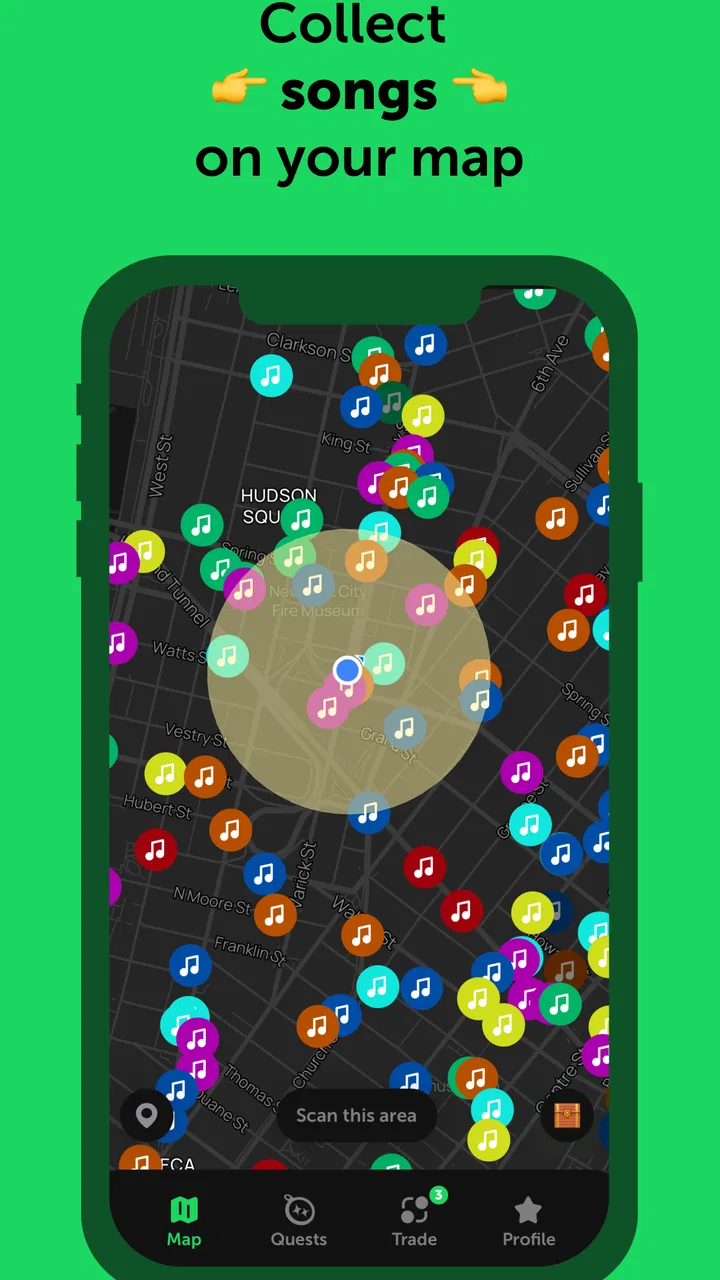
Soundmap - Find Your Songs is a location-based music-collecting game that turns your surroundings into a virtual map of songs. As you explore nearby areas, you can discover digital song drops, build a personal collection, trade tracks with other players, and complete themed sets. It combines music discovery with exploration, making everyday walks feel more interactive for users who enjoy collecting and sharing music.
02How do you find songs in Soundmap?
To find songs, you generally need to open the app while location services are enabled and explore the map around you. Song drops may appear in nearby areas, allowing you to collect tracks as you move through different locations. Availability can vary depending on your surroundings, activity in the area, and the game’s current systems, so some users may discover more drops in busy locations than in quieter neighborhoods.
03Does Soundmap require access to my location?
Yes, location access is an important part of Soundmap because the app uses your position to display nearby song drops and exploration opportunities. You may be able to browse certain parts of the app without constant location access, but the main collecting experience depends on it. Before playing, review the permission settings and choose the option that best matches your privacy preferences.
04Can I trade songs with other Soundmap players?
Trading is one of the main social features in Soundmap. Players can offer songs from their collections and negotiate exchanges with others, which is useful when trying to complete an artist collection, set, or personal wishlist. Trade availability and specific rules may change, so it is worth checking each offer carefully and confirming that the songs, quantities, and terms match what you intended.
05Is Soundmap free to download and play?
Soundmap can generally be downloaded for free, allowing users to begin exploring and collecting songs without paying upfront. However, the app may include optional in-app purchases, premium features, or systems that provide additional benefits. The free experience can still be enjoyable, but users should review the store listing and purchase settings before downloading, especially if the app will be used by children or on a shared device.
Pros
- Fun map-based way to discover and collect music.
- Encourages exploration through location-based song drops.
- Trading system helps users find tracks missing from their collection.
- Frequent events and challenges keep the collecting experience engaging.
- Simple interface makes browsing nearby drops easy for new players.
Cons
- Location permissions are essential
- which may concern privacy-conscious users.
- Rare songs can be difficult to obtain without active trading.
- Progress may favor users who visit busy urban areas regularly.
- Some features and collectibles may encourage in-app purchases.
- Battery and mobile data usage can increase during extended outdoor sessions.

Soundmap - Find Your Songs
Gallery